Today, i2Cool is filled with joy and gratitude to announce that Ir Prof. Edwin CY Tso, Co-founder of i2Cool and Chair Professor at the School of Energy and Environment, City University of Hong Kong, has been named one of the 2026 Ten Outstanding Young Persons of Hong Kong.
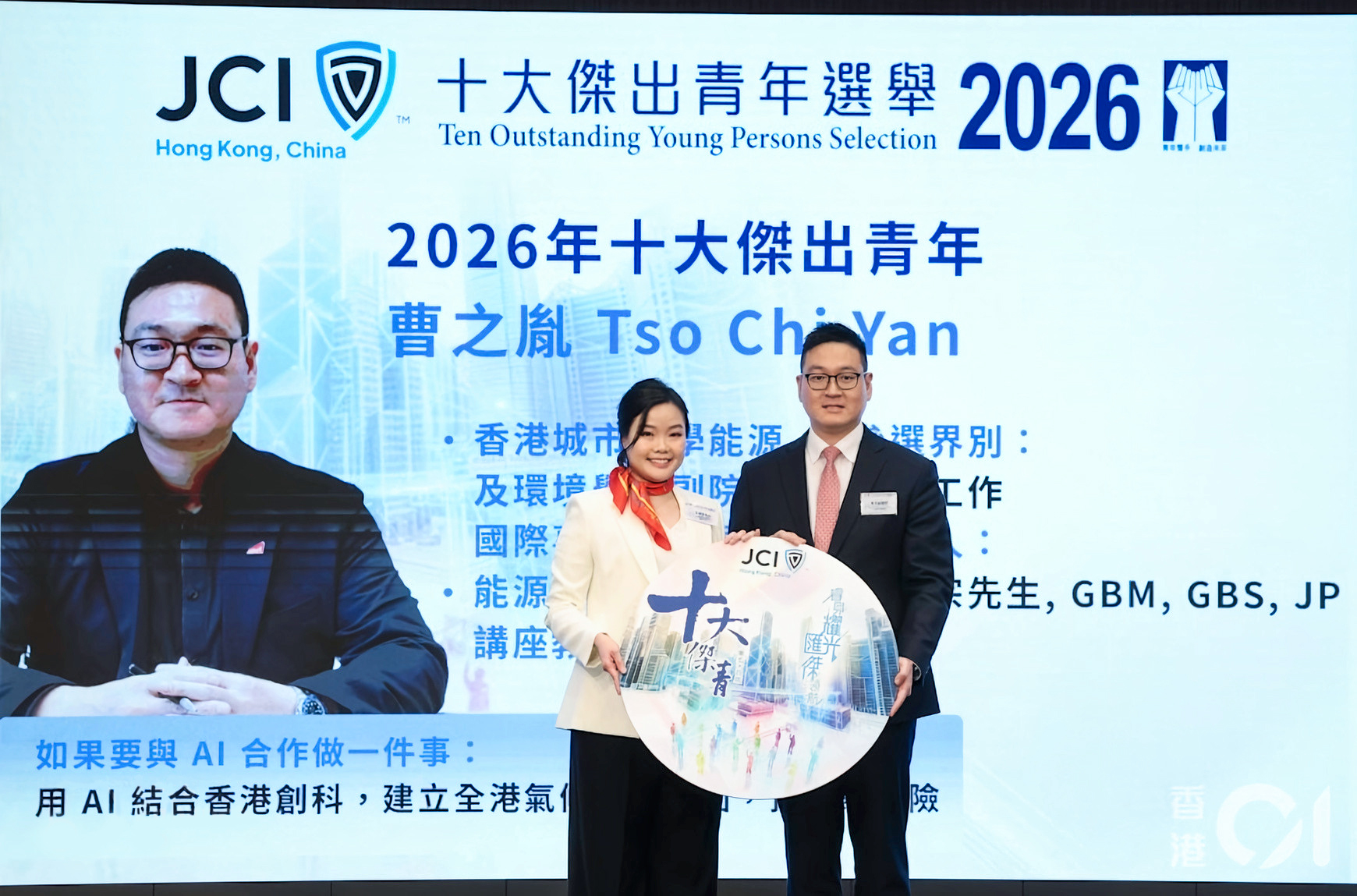
This honor recognizes not only Professor Tso’s research achievements in energy, environment and passive radiative cooling, but also his long-standing commitment to taking Hong Kong-originated technology out of the laboratory, into industry and the community, and using science and technology to nurture young people, serve the nation and connect with the world.
For i2Cool, this is not only good news for one of our co-founders. It is also an encouragement to the path of research commercialization in Hong Kong, to every innovator, and to all the partners, clients and team members who have walked alongside us.
Today, Edwin Tso is a university chair professor, researcher and entrepreneur. But his story did not begin with applause.
In 2002, Professor Tso arrived in Hong Kong from Shanghai and entered Form 4 as a transfer student. At the time, he did not speak Cantonese, and his English foundation was weak. He struggled academically. The unfamiliar language, environment and education system once made the young student doubt whether he could continue.
Fortunately, his family, teachers and the educational opportunities in Hong Kong did not give up on him. A sentence from his grandmother — “Knowledge is the permanent treasure that no one can take away from you” — became an important anchor in his life. He restarted through a higher diploma, later entered The Hong Kong University of Science and Technology, moved from being an engineer into research, and eventually stood on the university podium.
This experience has led him to believe that many young people are not without ability — they simply have not yet met someone who is willing to believe in them and give them a chance to try.
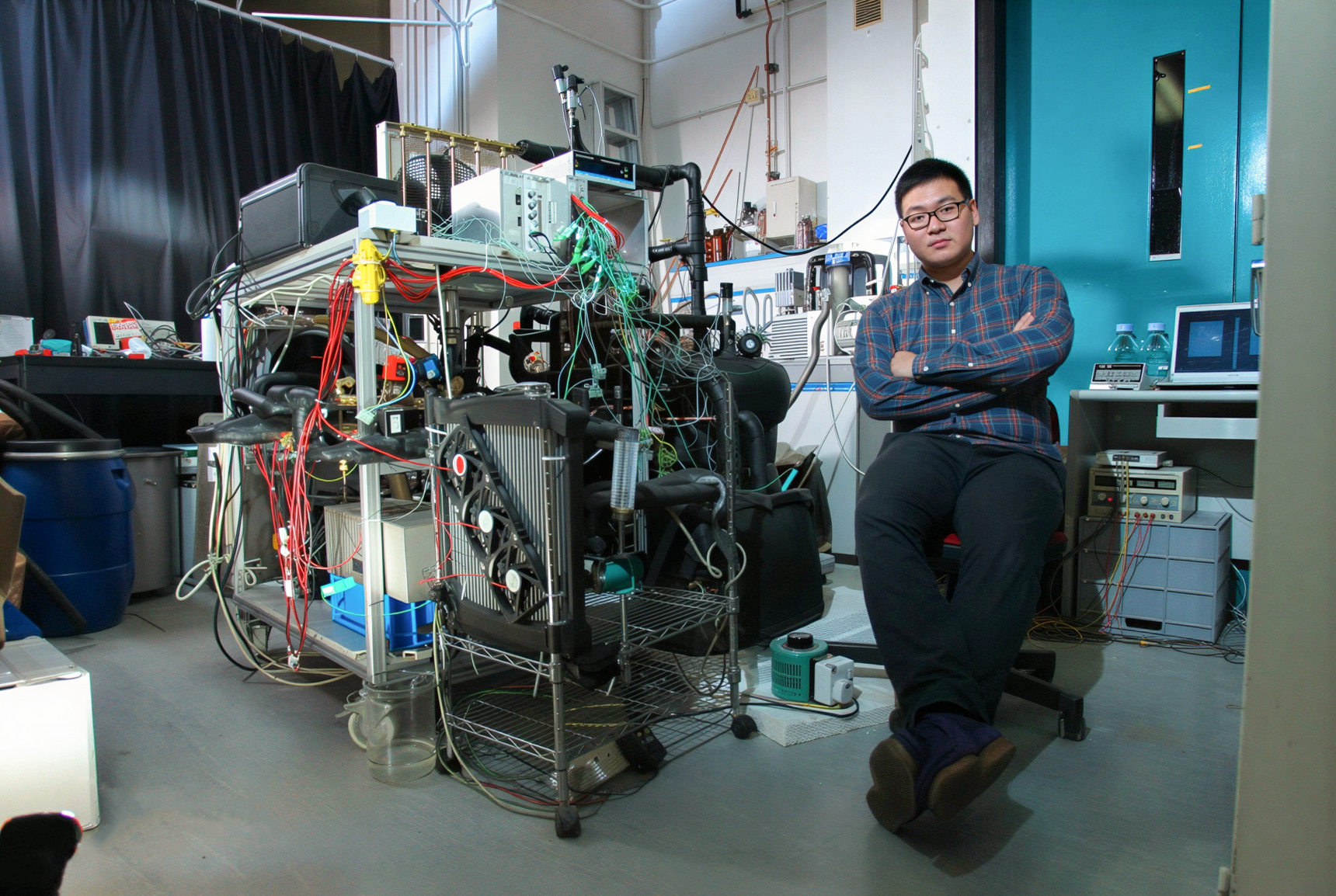
"What I treasure most is not the journey from student to professor, but the journey from a young person who once received help to someone who can gradually build platforms for more young people to grow."
After graduating from university, Professor Tso worked as a graduate engineer with a stable job and a clear career path. Yet he wanted to do more than complete tasks — he wanted to understand why energy and building problems occurred, and whether better answers could be found at the root.
He therefore chose to return to campus and dedicate himself to research in energy, the built environment and thermal management. In 2018, he joined City University of Hong Kong, focusing on passive radiative cooling, smart chromic windows, solar energy and water harvesting, heat transfer and building thermal management.
Over the years, he has held firmly to one belief: The ultimate goal of research should not only be the publication of papers, but the creation of value that society can feel and use.
Passive radiative cooling is a technology that uses the optical and thermal radiation properties of materials to reduce heat absorption and increase heat dissipation without requiring additional electricity. Research can prove whether the principle works, but turning the technology into real applications requires answering many more questions: Can it be mass-produced? Is it durable? Is the cost affordable? Is installation reliable? And can it perform consistently across different climates and application scenarios?
In 2021, Professor Edwin CY Tso and Professor Martin Zhu co-founded i2Cool with the support of City University of Hong Kong’s HK Tech 300 programme. Together with the team, they set out to transform Hong Kong-originated passive radiative cooling research into scalable products and solutions.
From laboratory formulations to industrial production, from campus tests to applications in buildings, industrial facilities, photovoltaics, automobiles, textiles and more — every step i2Cool has taken answers the same question: Can original research from Hong Kong truly help solve the world’s energy and thermal management challenges?
As of 2026, i2Cool’s passive radiative cooling technology has been deployed in more than 30 countries and regions across over 500 projects, covering an area exceeding 1,131,711 square metres. Behind these figures are countless tests, refinements and deliveries completed jointly by researchers, engineers, product teams, supply chains, installation teams, sales colleagues and partners.
Professor Tso often reminds the team that while technical recognition is welcome, the real test is whether clients are willing to use the product again, whether it performs reliably over the long term, and whether the technology genuinely improves people’s lives.
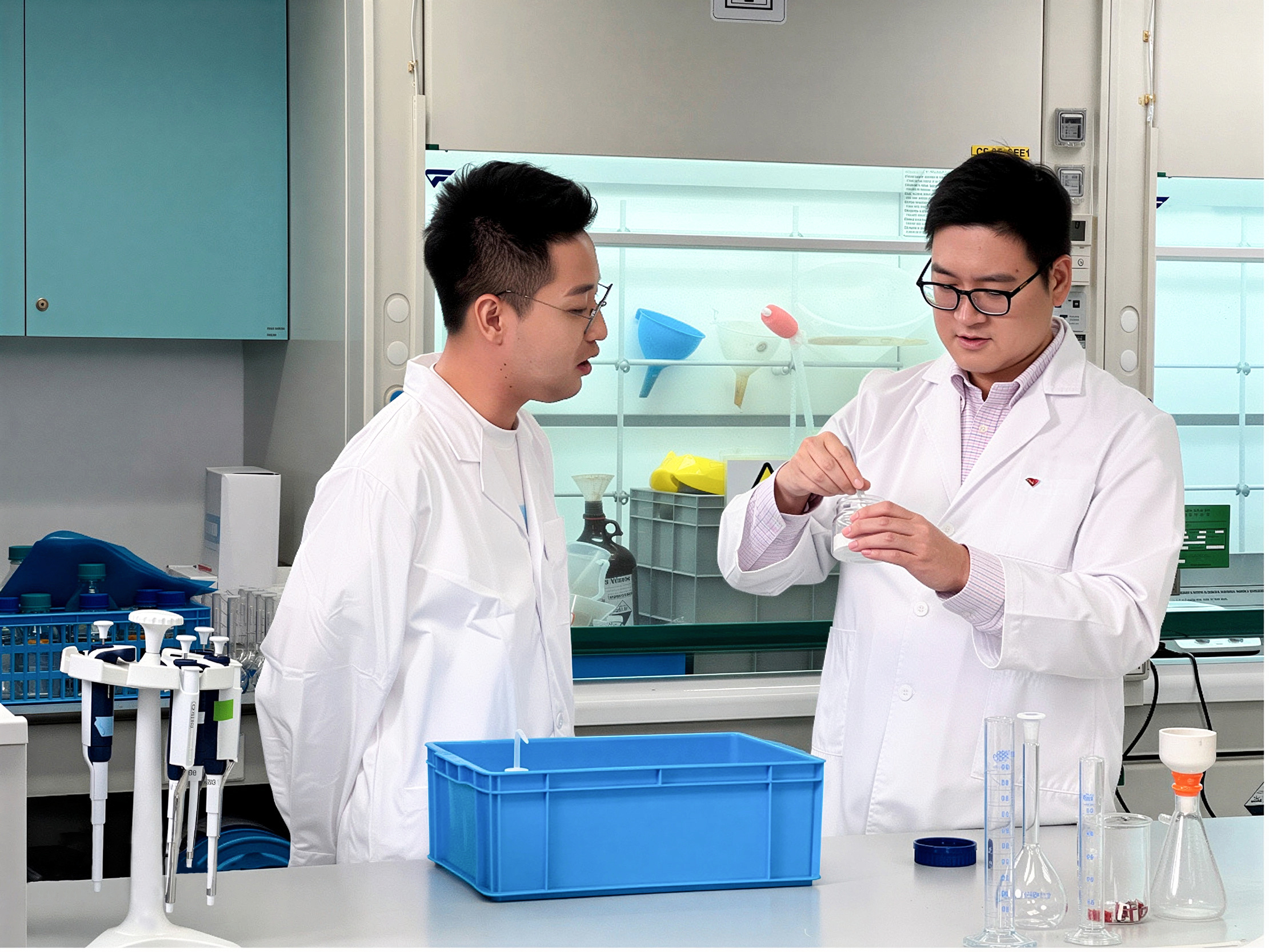
Professor Tso does not want the story to stop at entrepreneurship.
He has further taken the lead in advancing the “Innovation-driven Sustainable Future” (FIRST) programme. In 2025, the programme was recognized by UNESCO and included in the framework of the United Nations International Decade of Sciences for Sustainable Development (2024–2033). It aims to connect research teams, technology enterprises, young people, communities and international partners, bringing cost-effective sustainable technologies to regions with fewer resources that face challenges of extreme heat, energy or the environment.
The significance of FIRST goes beyond delivering a product to a particular place. It is about building a platform where technology, talent and communities can grow together.
In the first technology pilot at a rural school in Hunan, the team applied passive radiative cooling technology to the school rooftop, improving the learning and living environment for teachers and students during hot weather. Students from City University of Hong Kong were not merely observers — they participated in designing teaching materials, technical installation, data recording and climate education, working together with the school, the community and partner organizations to complete the project.
Starting from Hong Kong, moving into mainland China and overseas, and then bringing new questions, experience and partners back to Hong Kong — this is the path Professor Tso hopes young people will see: Hong Kong’s youth need not only be users of global innovation; they can also become solvers of the world’s problems.
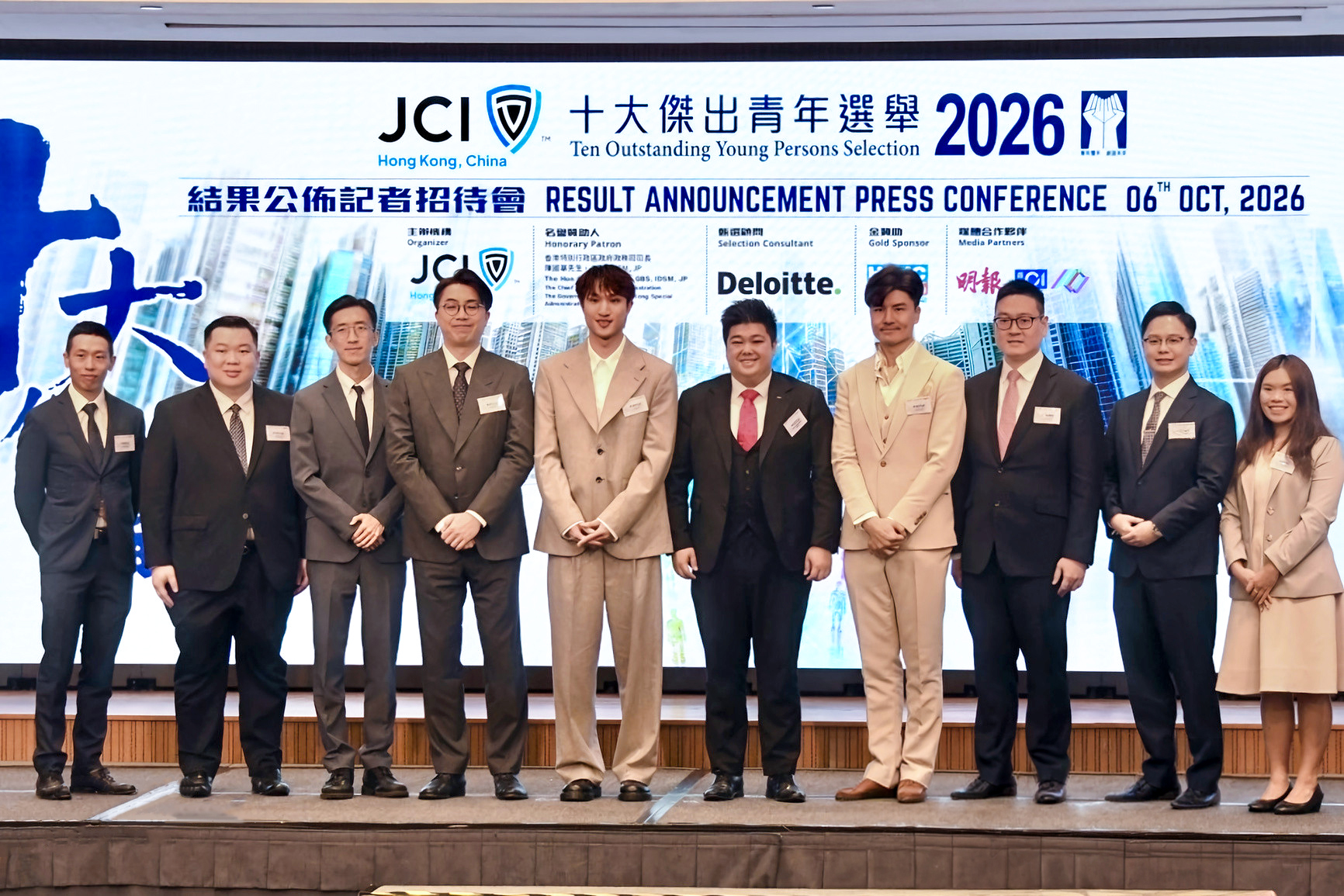
This Honour Belongs to Everyone Who Walked the Path Together
Upon learning of the award, Professor Tso said:
“Being named one of the Ten Outstanding Young Persons is not an end point for me, but a greater responsibility. My growth would not have been possible without my family, teachers, the educational opportunities in Hong Kong, my research team, co-founders, company colleagues, students and every partner. This honor belongs to everyone who believes in Hong Kong research and is willing to bring technology into the real world. Through this platform, I hope more young people will see that Hong Kong can be the starting point for innovation, that the country and the world can be the stage for practice, and that the knowledge we learn today can become answers to humanity’s shared challenges tomorrow.”
i2Cool firmly believes that no research or product is completed by one person alone. Today’s honor also belongs to every researcher who repeatedly verified data in the laboratory, every engineer who turned formulations into stable products, every colleague who went on site to complete deliveries, and every client and partner who was willing to give new technology a chance.
We also sincerely thank City University of Hong Kong, the HK Tech 300 programme, our research and industry partners, community and non-profit organizations, and everyone who has supported i2Cool and the FIRST programme.
This award will not change i2Cool’s requirements for research integrity, product quality or responsibility to clients. But it can help more people see a path that is still not widely known: that Hong Kong universities can produce world-class original research; that research can be transformed into industry through entrepreneurship; that industry can reach the world through collaboration between Hong Kong and the Greater Bay Area; and that young people can find their place in this process.
Going forward, i2Cool will continue to deepen research and development in passive radiative cooling and next-generation thermal management materials and drive reliable applications of the technology in more building and industrial scenarios. At the same time, we will work with universities, enterprises, schools, social welfare organizations and international partners to provide more opportunities for young people to engage with research, products, community projects and international practice.
We hope that one day, “Researched in Hong Kong, Applied Globally” will no longer need to be specially emphasized — it will simply become the natural everyday reality of Hong Kong innovation.
Professor Tso’s story is not meant to prove that “hard work always leads to success.” Everyone’s starting point, resources and opportunities are different, and every turn in his path was inseparable from the trust and companionship of others.
What this story truly hopes to convey is this: when you still cannot see your place, it does not mean you lack ability; when one path does not work out, it does not mean the destination has already been decided. You can seek help, learn, change direction, and connect your expertise to problems larger than personal achievement.
Hong Kong can be the starting point for innovation. The country and the world can be the stage for practice. The knowledge you learn today can become the power to improve human lives tomorrow.
Once again, we congratulate Ir Prof. Edwin CY Tso on being named one of the 2026 Ten Outstanding Young Persons of Hong Kong.
i2Cool will continue to walk with him, with the entire team and with all our partners — responding to global challenges through Hong Kong research, bringing more coolness to the world through passive radiative cooling, and giving more young people the opportunity to step into innovation and towards the world.


 Previous


